
June 27, 2025
Data Governance
Are you facing challenge with redundant data? Are data not consistent? Are data lacking completeness?
If answer to any of these are ‘yes’ then you certainly need the Governance process applied. Your master data and reference data creation needs to be governed to avoid creating crap values – avoid ‘Crap in, Crap out’.
DataG from AccelSoft allows you to govern your Master as well as Reference data effectively. It supports below Master objects –
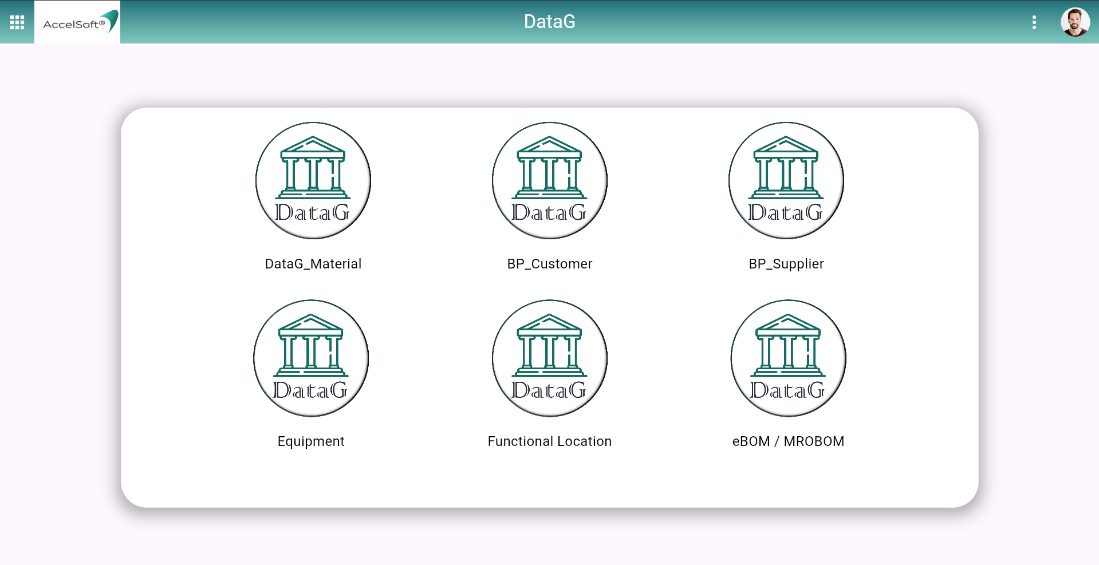
1. Material along with
- Purchase Infor records
- Source List
- OEM (Original Equipment Manufacturer) MaterialPricing
- Pricing
- Bill of Material
- New Product Introduction

2. BP

3. Assets
- Equipment – DataG enables you to govern Equipment Data creation/update.
- FLoc – DataG enables you to govern Functional Locations Data creation/update.
- MROBOM –DataG enables you to govern MRO Bill of Material Data creation/update.
Users may leverage out of the box connectors or API to sync data in SAP, post approval.
Now the question cropping to your mind could be –
A. How is it different from other Data Governance Tools?
DataG is different from other available products by-
- It’s built on Cloud,
- It comes with no-code, low-code for enabling just by configuration –
- Value-Help – for any new field other than provided out of box,
- Validation – for any new field or updated validation on existing field,
- Derivation – for any new field or updated derivation on existing field,
- Business Rules – for any new field or updated business rules in an existing field.
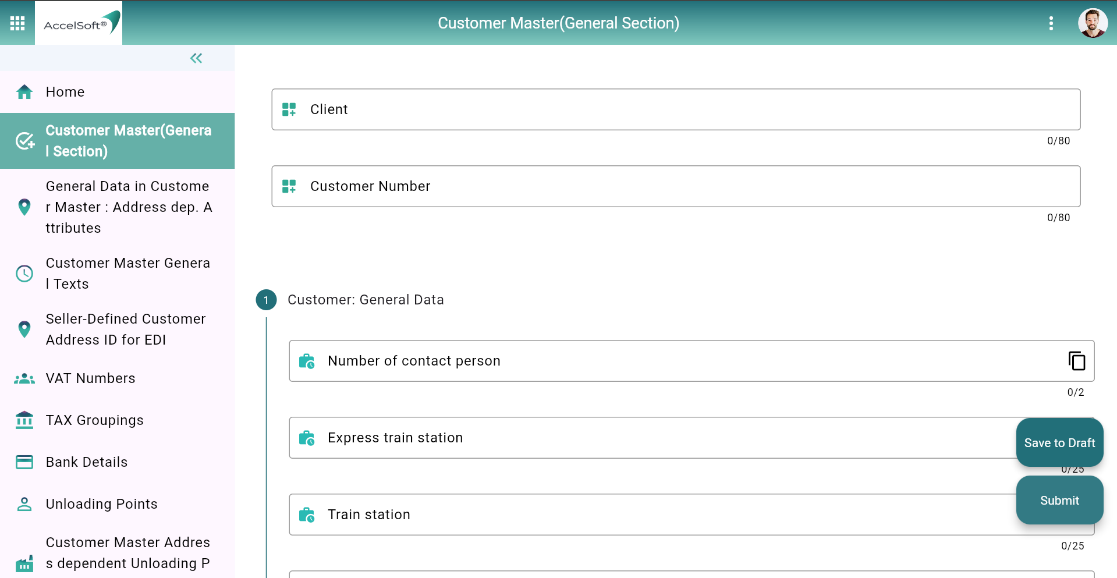
B. How would it be different from the processing standpoint?
- Auto-Text generation based on configurable business rules – Users may define respective Business Rules to control defining Material / Equipment Description text. This would help them adhere the description to standardize the text.
- UNSPSC Taxonomy based classification – this would help them align with UNSPSC standards and keep them ready for compliance.
C. Why should you evaluate this product?
Usual time to production depends on below –
A. Capturing Workflow, designing and developing those DataG comes bundled with DataFlow which is no-code, low-code platform for designing Workflow. Once designing is completed, Users need to click on ‘Generate’ button to get –
- Codes for the Workflow
- API of that Workflow
- Deployment of newly generated API
All these happen in flicker of seconds with No-Code approach.
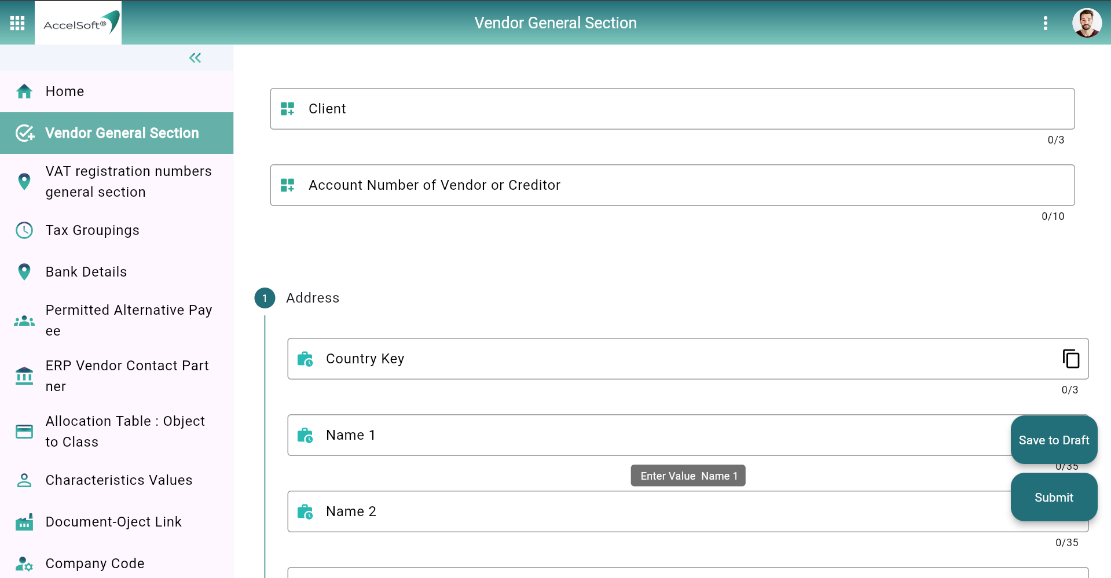
B. Creating Validation & Derivation as per varied business scenario DataG has configuration-based validation & derivation generation mode. Users need not require coding skills to define business-specific validation and derivation individually.
C. Creating Business Rules for process compliance
DataG comes with it’s own Rules-Engine which enables Users to define business scenario based Rules with bothering to think of coding to develop API and deploying that on Cloud for continuous usage.
D. AI led User experience
DataG has it’s own AI-led recommendation engine. Based on patterns of User’s inputs, it recommends values for creating new records. Now think of your 800+ fields getting filled, and you are having options to overwrite values in some (say 20-30 odd fields) and done with inputs. DataG makes it happen.
E. Supports Single Object Process (SOP) as well as Multi Object Processing (MOP).
With additional features & functionalities (other than listed above), your team would be delighted to follow governance easier than earlier.